
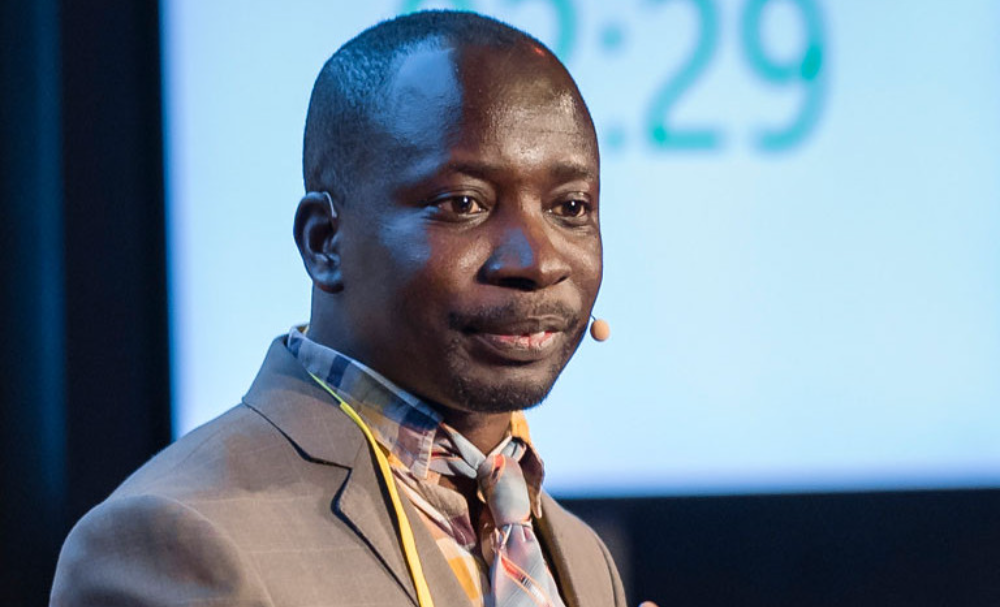
KNUST alumnus Dr. Bernard Appiah has received the K. Everett M. Rogers Award from the American Public Health Association (APHA), one of the field’s top honours recognising significant contributions to public health communication. The award was presented on November 3 at the APHA annual conference in Washington, D.C.
Dr. Appiah, now an assistant professor of public health at Syracuse University’s Maxwell School, is internationally regarded for developing innovative communication strategies that strengthen health outcomes in low- and middle-income countries.
His work has helped reshape how radio drama, community dialogue and public engagement are used to influence health behaviour.
Growing up in Ghana, Dr. Appiah drew early inspiration from his father, who served as a village communicator by sounding the chief’s gong-gong to summon residents for announcements. He trained as a pharmacist at KNUST before pursuing advanced studies in science communication and public health in the United States.
The Rogers Award, named after the pioneering communication theorist behind the diffusion of innovations theory, recognises excellence in research, teaching and practical communication initiatives that advance public health.
Professor David Larsen, Chair of the Public Health Department at Syracuse University, described the recognition as well deserved.
“This award underscores Bernard Appiah’s leadership in advancing public health communication and his commitment to training the next generation of scholars and practitioners,” he said.
Since joining Syracuse University in 2020, Dr. Appiah has led major research and teaching initiatives. He serves as director of the Research Program on Health Communication and Public Engagement (H-COPE), and holds research affiliations with the Maxwell African Scholars Union and the Lerner Center for Public Health Promotion and Population Health.
His signature 10+10+30 radio model, which combines a 10-minute serial drama, a 10-minute health-worker discussion, and a 30-minute listener phone-in has been deployed across Africa to improve public health decision-making. In Ethiopia, the approach led to higher childhood vaccination rates among parents who listened to the broadcasts.
Dr. Appiah’s projects have attracted support from major funders, including the Bill & Melinda Gates Foundation, Grand Challenges Canada and the UK National Institute for Health and Care Research.
Reacting to the honour, Dr. Appiah said the award carries deep personal significance.
“I have since 2005 been using entertainment-education interventions to diffuse innovations to change health behaviour, so to receive such an important award that bears Rogers’ name feels surreal,” he said.


